
Curious about our work in Forage Systems group? Check out our topics of interest below!
Evaluating Machinery Traffic Effects on Alfalfa Systems
Main investigator: Dr. Beatriz Bizzuti, Postdoctoral Associate.
Collaborator(s): Dr. Francisco Arriaga, Dr. John Grabber, Dr. David Jaramillo, Dr. Brian Luck, Dr. Mark Renz, Dr. Heathcliffe Riday.
Rationale: Alfalfa harvest requires many mechanized operations, and being harvested 3-4 times per growing season, this can result in significant plant damage and soil compaction that potentially reduce alfalfa production and stand longevity.
Objectives: This project explores how different types of machinery traffic affect alfalfa, a key forage crop for the dairy industry in the state of Wisconsin.
This work is funded by the United States Department of Agriculture (USDA) and conducted in collaboration with the USDA–Agricultural Research Service.
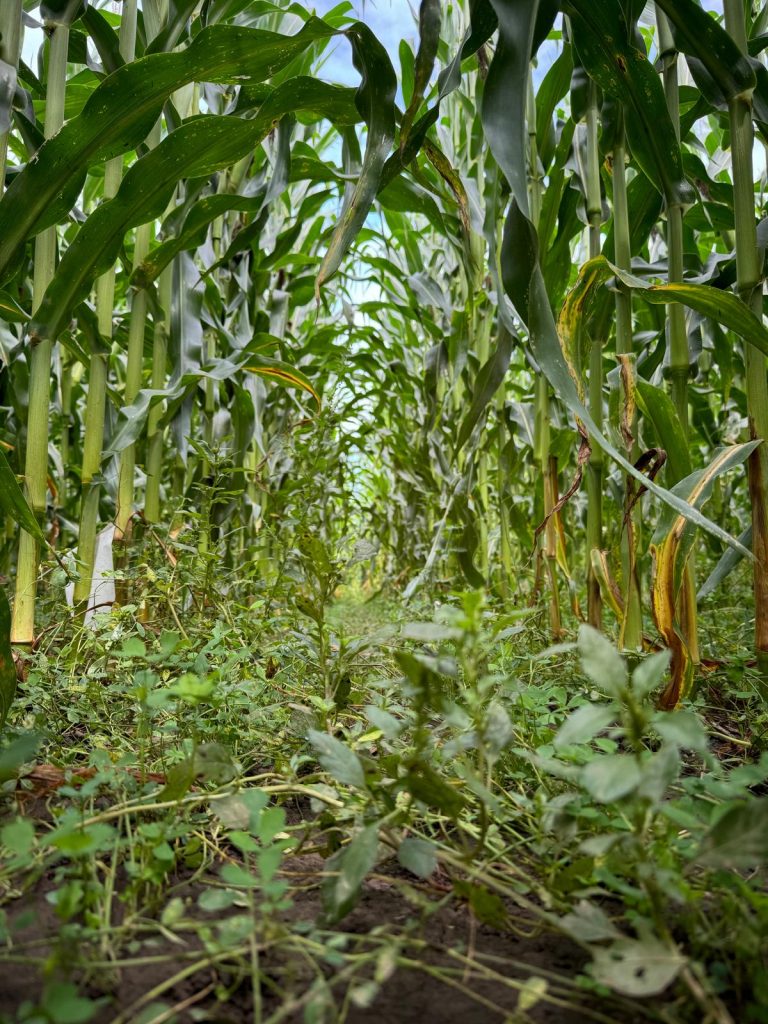
Figure 1. This figure shows a field under the alfalfa-corn interseeded system in the first year of production. Corn will be harvested for silage in year 1, and alfalfa will be grown alone for years 2-4.
TRIAL 1: Traffic Effects on Alfalfa-Corn Interseeded Systems
Alfalfa-Corn Interseeded systems involve establishing corn and alfalfa in the same location, at the same time (see more information here). We are studying how various agricultural machinery traffic scenarios during corn (year 1) and alfalfa (year 2) harvest impact forage production, soil compaction, and alfalfa persistence. By simulating real field conditions (at Arlington Agricultural Research Station), we aim to identify strategies that reduce traffic-related damage to alfalfa plants and improve the sustainability of forage systems used by dairy producers.
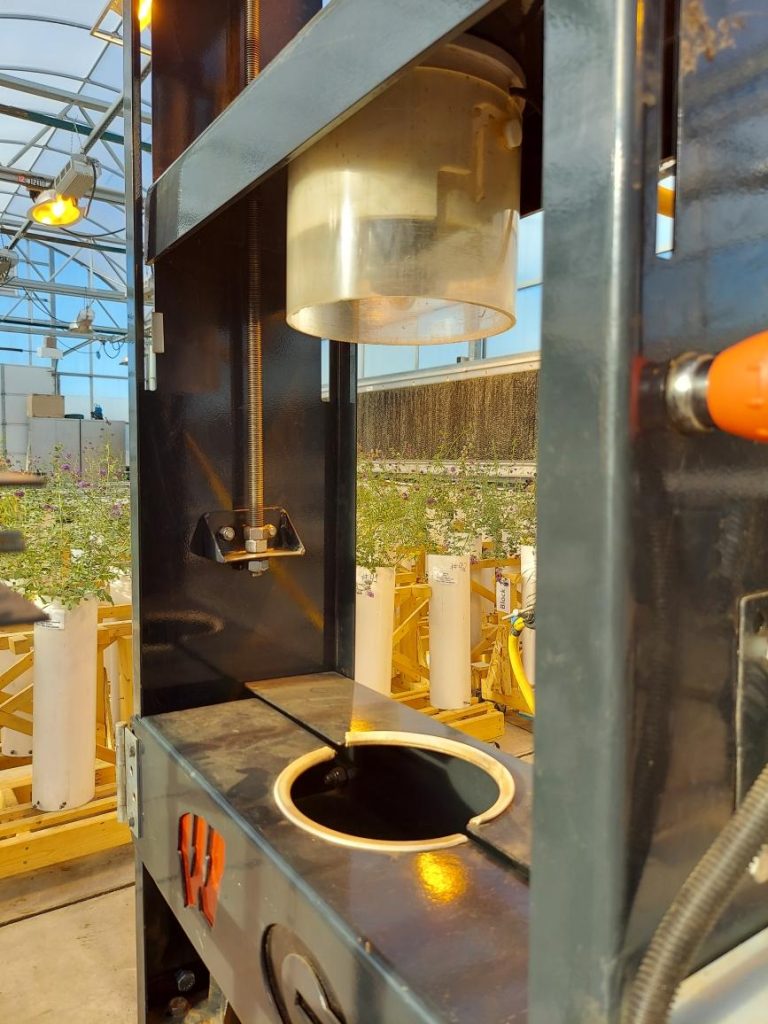
Figure 2. Greenhouse study simulating traffic stress to alfalfa plants. We are uniquely posed to run this trial thanks to Dr. Brian Luck’s expertise in developing a machine to simulate traffic.
TRIAL 2: Alfalfa Response to Simulated Machinery Traffic
To better understand the specific effects of traffic on alfalfa and soil responses, a controlled greenhouse study is also being evaluated at West Madison Agricultural Research Station. We tested two types of alfalfa (with different root structures) under varying soil moisture levels and traffic conditions, including traffic that affects only the soil, only the plant, or both. The goal is to quantify alfalfa above- and belowground responses to machinery traffic, and identify if these responses are due to damage to the plant, soil compaction, or a combination of both. Data analysis is currently underway, and results will provide valuable insights into alfalfa’s response to machinery traffic.
Integrating Cover Crops With and Without Allelopathic Properties in Forage and Grain Production Systems of the Upper Midwest
Main investigators: Colin Van De Loo (Forage System; M.Sc. student) and Arthur Franco (Grain System; Ph.D. student)
Collaborator(s): Dr. Beatriz Bizzuti, Dr. Rodrigo Werle, Dr. Lisa Kissing Kucek, Dr. Harkirat Kaur
Rationale: Cereal rye is a common cover crop in Midwestern agricultural systems. Similar to other small grains, cereal rye can present allelopathy- the natural production of chemicals that reduce growth and emergence of plants from other species. This trait occurs naturally in small grains and confers allelopathic plants a competitive advantage. Allelopathy is also heritable, and can range anywhere from zero (no allelopathy whatsoever) to high levels of allelopathy. As the effect of cereal rye allelopathic compounds has not been extensively studied under field conditions, we need to better understand how management practices such as termination method applied to allelopathic cereal rye affect weed control and performance of subsequent cash crops.
Objectives: This study aims to improve cover crop management guidelines and adoption, decrease weed pressure, and improve cash crop yields in association with allelopathic cover crops.
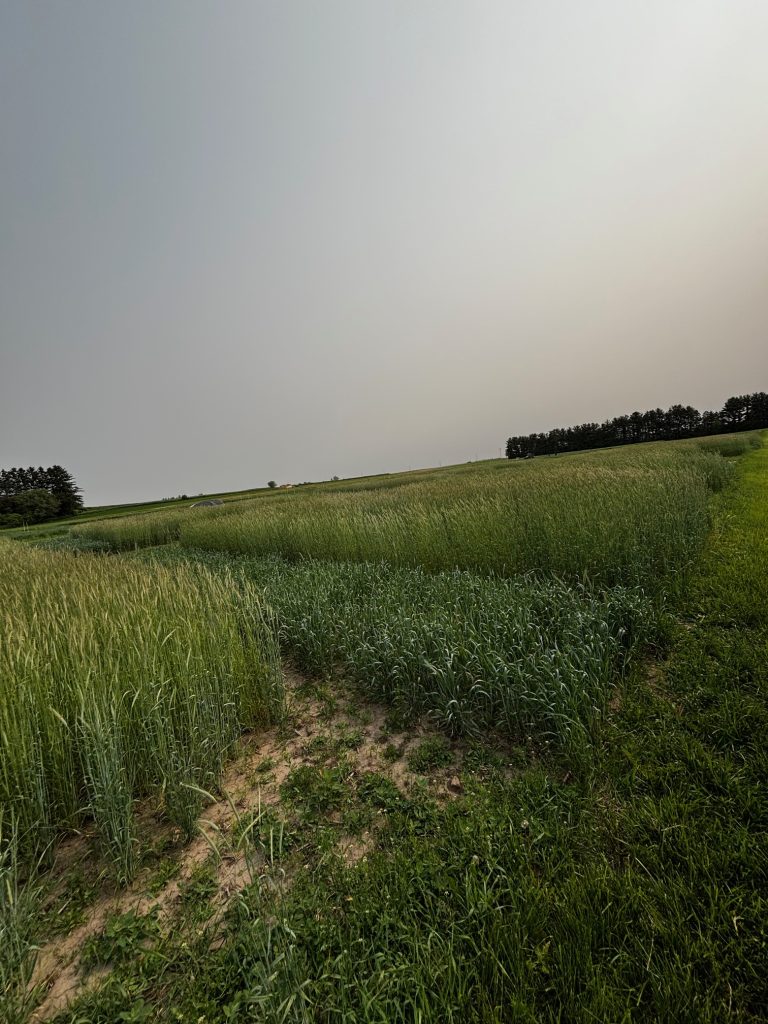
Figure 1. Plots of allelopathy study at the Arlington Agricultural Research Station. The study evaluates allelopathic (ND Gardner rye, Elbon rye) and non-allelopathic (winter triticale) cover crops under different termination and tillage systems to improve forage and grain production management in the Upper Midwest. Checks with no cover crop are also included for comparison.
TRIAL 1: Integrating Cover Crops With and Without Allelopathic Properties in Forage Production Systems of the Upper Midwest
In an effort to better understand the allelopathic interactions of cereal rye within forage production systems, we established an alfalfa field with three cover crop treatments: ‘ND Gardner’ rye, ‘Elbon’ rye, and winter triticale. ND Gardner and Elbon rye are known to exhibit allelopathic effects, whereas winter triticale does not. The cover crops were terminated using three methods commonly practiced in the upper Midwest: planting green, harvest followed by glyphosate application, and glyphosate followed by tillage. In addition, we included treatments comparing the presence and absence of cover crops under both tillage and no-tillage systems. This study will be replicated over a period of two years at the Arlington Agricultural Research Station.
Nutrient Cycling Through Decomposition in Alfalfa Systems
Main investigator: Colin Van De Loo (M.Sc. student)
Location: Arlington Agricultural Research Station
Rationale: Alfalfa is a cornerstone forage crop in Wisconsin, providing critical feed for the dairy industry and important environmental services such as nitrogen fixation. When alfalfa stands are terminated, large amounts of above- and below-ground biomass decompose and release nutrients back into the soil, reducing the need for synthetic fertilizer in subsequent crops like corn silage. However, the timing and extent of nutrient release depend on factors such as stand age, biomass type, manure application, and environmental conditions. Even within the same species, above- and below-ground biomass often decompose at different rates due to variations in chemical composition. A deeper understanding of nutrient cycling in alfalfa systems can improve nutrient management, reduce input costs, and enhance sustainability.
Objectives: This study aims to quantify nitrogen and phosphorous mineralization from alfalfa biomass decomposition at different termination times (Spring vs. Fall), compare nutrient release dynamics between above- and below-ground biomass, assess how surface manure application influences nutrient cycling following alfalfa termination, and provide data to guide nutrient management recommendations for dairy and forage producers in Wisconsin and throughout the Upper Midwest.
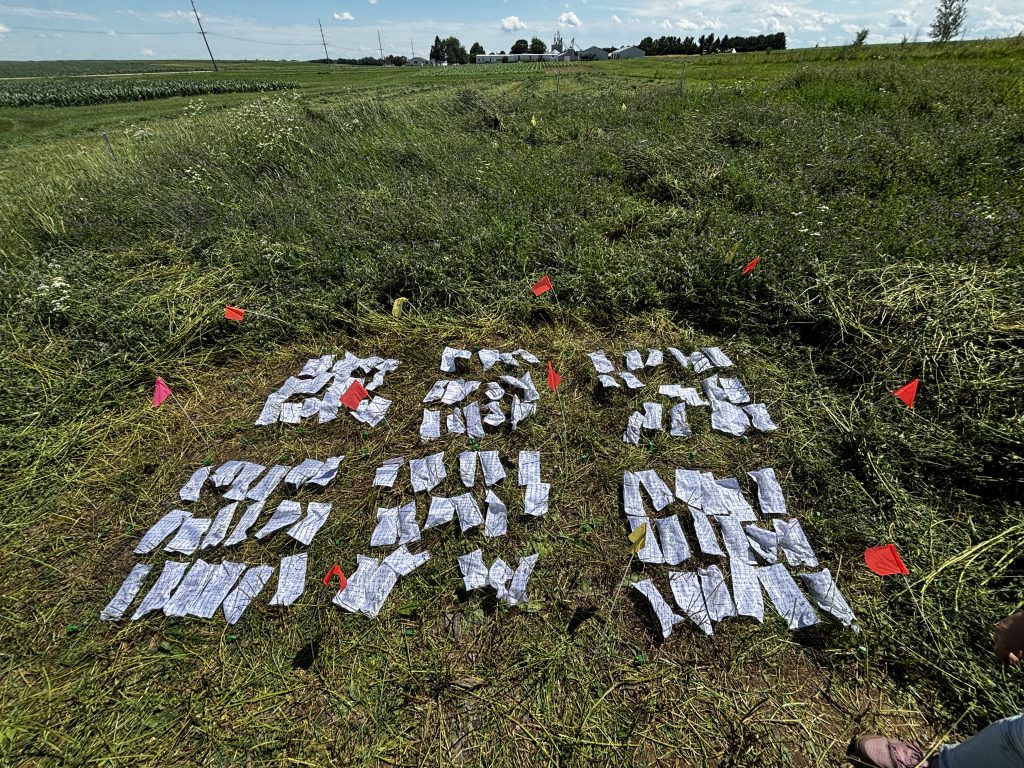
In this study, alfalfa biomass will be incubated in the field using the litterbag method to measure decomposition rates and nutrient release over time. Treatments include season (Fall vs. Spring), biomass type (shoots vs. roots), and manure application (with vs. without), replicated across two years. Results will help clarify the timing and quantity of nutrients available to subsequent crops, contributing to more efficient and environmentally responsible farming practices.
Figure 1. Litterbag setup for the alfalfa decomposition study at the Arlington Agricultural Research Station. Above- and below-ground alfalfa biomass is incubated in-field to quantify nutrient release over time, with manure applied to selected treatments.
Improving Nitrogen Use Efficiency in a Corn-Alfalfa Intercropping System
Main investigator: Dr. Marina Chagas Costa (ORISE post-doctoral researcher)
Collaborator(s): Dr. John Grabber (USDA), Dr. Xia Zhu-Barker (UW-Madison), Dr. David Jaramillo (USDA), Dr. Christina Arther (USDA)
Location: USDA research facility near Prairie du Sac, Wisconsin, USA
Rationale: Alfalfa is a key forage crop for dairy herds, but it is low yielding during the establishment year. Corn–alfalfa intercropping helps to mitigate this problem by using corn as a high-yielding companion crop during alfalfa establishment. However, nitrogen use efficiency remains a challenge because alfalfa competes with corn for fertilizer nitrogen, and this often leads to reduced nitrogen uptake and yield of the corn companion crop.
Objectives: The goal of this experiment is to test whether different placement methods of enhanced-efficiency nitrogen fertilizer can improve nitrogen uptake and yield of corn grown as a companion crop during alfalfa establishment.
Figure 1. Corn–alfalfa interseeding three weeks after planting, showing the early establishment of both crops.
In this study, we are evaluating nitrogen dynamics in a corn–alfalfa interseeding system over two growing seasons to capture year-to-year variation. We applied 140 kg/ha of urea enriched with 5% ¹⁵N either without inhibitors, with the urease inhibitor N-(n-butyl) thiophosphoric triamide (NBPT), or with NBPT plus the nitrification inhibitor Nitrapyrin. These inhibitors help maintain nitrogen in plant-available forms for longer periods by slowing volatilization and leaching losses. The fertilizer was placed using three methods: surface broadcast at planting, deep banding two inches to the side and five inches below the corn row, or a split application with 50% deep banded at planting and 50% surface banded to the corn row at the V8 stage. These treatments allow us to evaluate how fertilizer placement and the use of inhibitors influence nitrogen availability in the system. To capture these dynamics, we use ¹⁵N-labeled fertilizers, which enable us to trace how much of the applied nitrogen is absorbed by corn, taken up by alfalfa, and retained in the soil—providing direct insight into nitrogen use efficiency in this intercropping system.
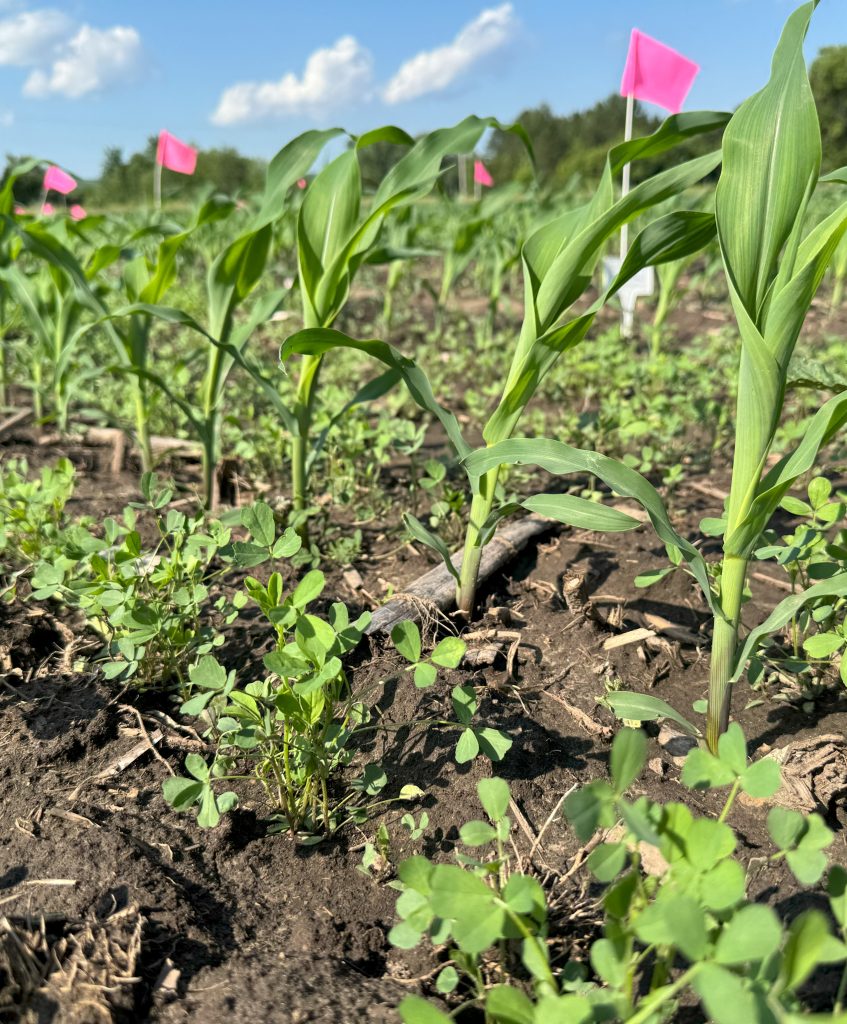
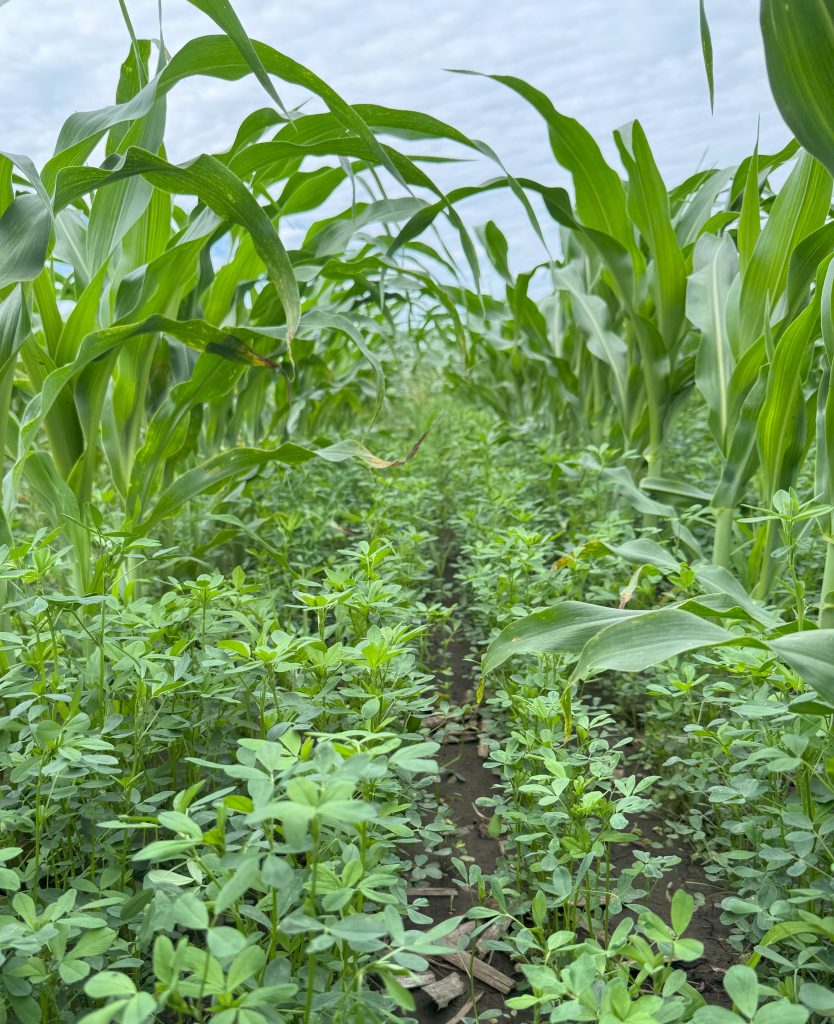
To assess how these fertilizer strategies affect crop performance and nitrogen dynamics, we are measuring key indicators, including corn and alfalfa height, alfalfa biomass, corn silage yield, and nitrogen accumulation in both crops. Because nitrogen management can also influence alfalfa’s ability to fix atmospheric nitrogen, we are monitoring root nodulation as an indicator of biological nitrogen fixation. These measurements allow us to connect fertilizer treatments directly to crop growth, nitrogen uptake, and the balance between fertilization and biological fixation.
Through this approach, our research seeks to optimize fertilizer placement and the use of inhibitors to improve nitrogen use efficiency in corn–alfalfa intercropping systems, while preserving the benefits of alfalfa establishment and biological nitrogen fixation.
This work is funded by the United States Department of Agriculture (USDA) and conducted in collaboration with the USDA–Agricultural Research Service.
Figure 2. Corn–alfalfa interseeding one month after planting.
Use of cover crops in organic crop-livestock integrated systems
Main investigator: Dr. Abmael Cardoso (Scientist 1)
Location(s): Arkansas and North Dakota
Collaborator(s): Dr. José G. Franco and Dr. Christine Nieman
Rationale: Constraints such as water deficit, vulnerability to soil erosion, poor soil fertility, and weed management have augmented the need for alternative cropping systems that can help mitigate the challenges in organic agriculture and maintain soil functions. Modern approaches, such as the use of cover crops, increasing diversity through diversification of crop rotations/plant mixtures such as perennial forages, and integrating livestock into the cropping system, are alternatives to face these constraints
TRIAL 1: Grazing and cover crop effects on productivity, soil health, and weed management during transition to organic production
Objective: To evaluate the impact of six objective-based cover crop mixtures, including a perennial forage biculture, and crop-livestock integration on above-ground biomass, weed management, soil responses, and subsequent crop yield after organic transition in the semi-arid Northern Great Plains.
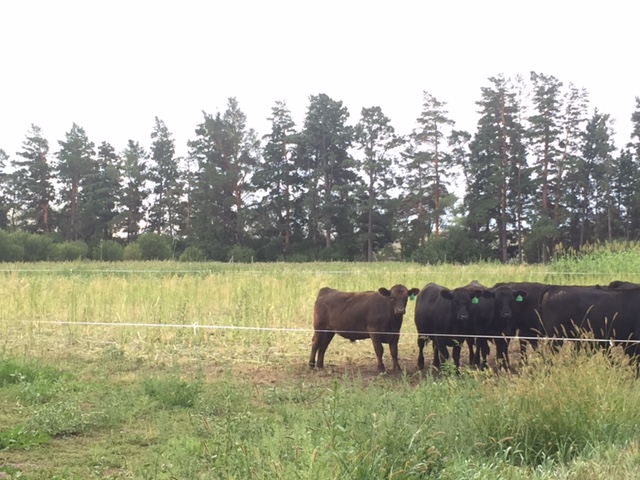
Six cover crop mixtures were tested in a four-year field experiment during the transition to an organic system in the semi-arid region of the Northern Great Plains. Cover crop mixtures were either grazed or left ungrazed. Objective-based cover crop mixtures were: annual crop rotation, annual weed suppression cover crop mix, annual soil building cover crop mix, annual pollinator support cover crop mix, annual multipurpose cover crop mix, and a perennial forage biculture. Briefly, the six objective-based cover crop mixtures were a weed suppression mixture intended to maximize weed control and decrease the weed seed bank, a soil building mixture intended to increase soil fertility, a pollinator mixture intended to provide floral resources for pollinators, a multipurpose mixture to achieve multiple goals, a three-year annual crop rotation harvested for grain, and a perennial grass-alfalfa forage biculture.
Figure 1. This figure shows a field cultivated with a cover crop mix and grazed by heifers. Cover crops were grazed in late summer to fall to assess the benefits of integrating livestock into cropping systems on weed management, soil health, and production.
TRIAL 2: Crop yield and weed community response to cover crop termination strategies under organic management in the mid-South
Objective: To evaluate the efficacy of four cover crop termination strategies incorporating both no-till and tillage systems with and without grazing under organic management on crop plant population, weed composition, weed canopy cover, and yield of cash crop in the mid-South.
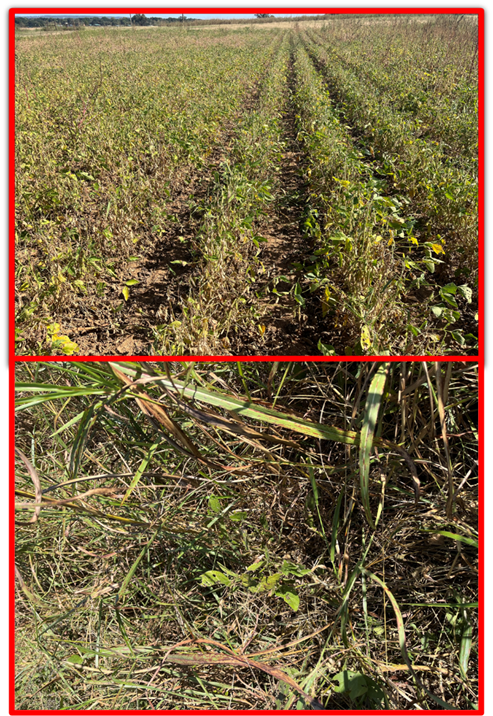
Four cover crop termination strategies were studied in Booneville, Arkansas, in a four-year organic field study to investigate the benefits of cover crops and grazing on the suppression of weeds and on cash crop production. The termination strategies were: 1) no-till: a conservation management system in which the cash crop was drilled into a fall-planted cover crop that was subsequently terminated via roller crimping in spring; 2) two integrated crop livestock systems in which the fall-planted cover crop was grazed and the cash crop was planted immediately after grazing (no-till); 2) or planted following tillage (3); and 4) a double-cropping system in which the fall-planted cash cover crop was harvested for grain and the cash crop was planted after tillage.
This work is funded by the United States Department of Agriculture (USDA) and conducted in collaboration with the USDA–Agricultural Research Service.
Figure 2. Soybean in the double-cropping system (tillage after harvest of the cash crop; top) and soybean in the no-till system (planted into the grazed cover crop’ bottom). Both pictures were taken in fall of 2024.
Establishing Grower Recommendations for Vetch Toxicity
Main investigator: Jasmin Buffenn (PhD Candidate)
Location(s): USDA ARS Dairy Forage Research Center in Madison, WI; USDA Prairie Du Sac field location in Prairie Du Sac, WI
Collaborator(s): Lisa Kissing Kucek, Laurie Reinhart, Heathcliffe Riday, Kevin Panke-Buisse, Wayne Zeller, Mike Sullivan
Rationale: Due to important traits such cold tolerance and a protein content higher than most other winter annual legumes, vetch (Vicia spp.) has the potential to be a high-quality forage. However, cases of vetch disease have been reported in cattle when vetch is used as a forage, but the disease is not well understood.
Objectives: To better understand vetch disease, our objective is to quantify the toxic metabolites cyanamide and L-canavanine which are believed to be the causative agents of the disease. We are interested in factors including genetic variation, management, and physiological maturity and we hypothesize that one or more of these factors may have an effect on the concentrations of the compounds. We have collected two seasons of data and are evaluating genetic variation in the form of four varieties, management in the form of three processing methods (dried (hay), fresh (grazing), and fermented (ensiled)), and physiological maturity in the form of an early and late harvest date. Since a method had not been previously developed to quantify the compounds of interest in vetch as a forage, we are developing a method to quantify our compounds using LCMS. From our results, we will determine whether these factors have an effect on the concentration of the metabolites of interest and provide a recommendation to growers on how to safely feed vetch and prevent toxicity.
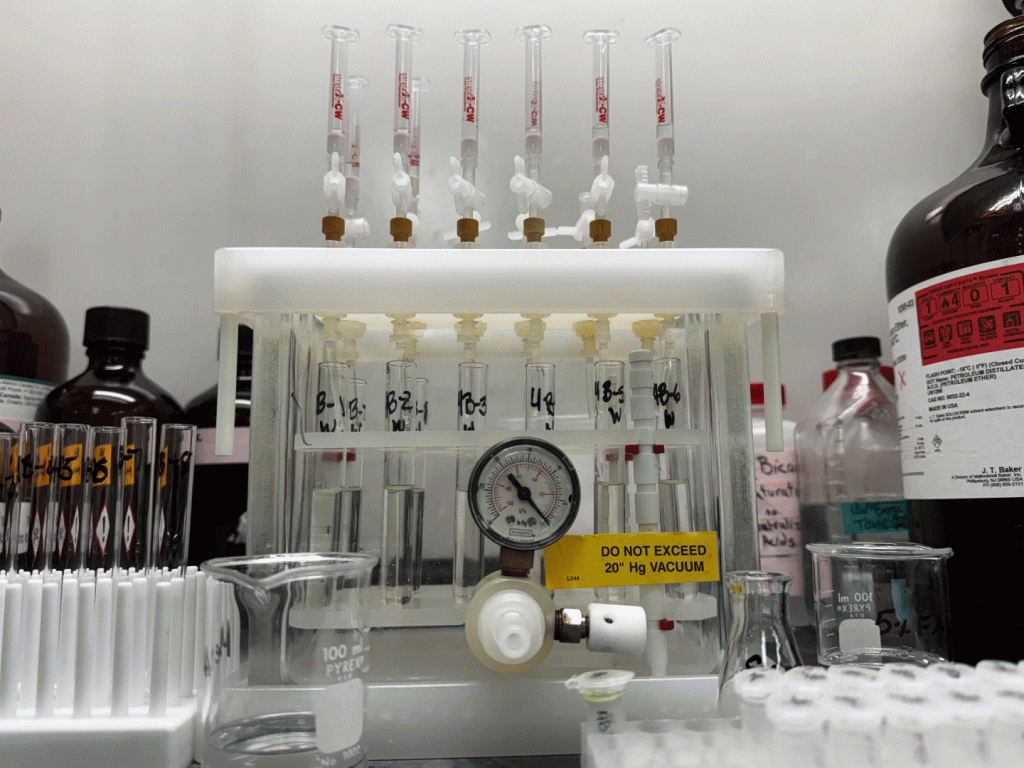
Figure 1: The solid phase extraction purification step in the method we have developed for L-canavanine. After preparing the sample extract, it is then purified using syringe filtration, followed by solid phase extraction with a vacuum manifold. The figure shows the vacuum manifold towards the center with the columns attached at the top. Sample is loaded into the columns and filtered into the test tubes underneath as shown. The column bed is then washed multiple times and the compound of interest eluted. For L-canavanine, reverse phase columns with cation exchange are used and the compound is eluted using a slightly acidic polar solution.
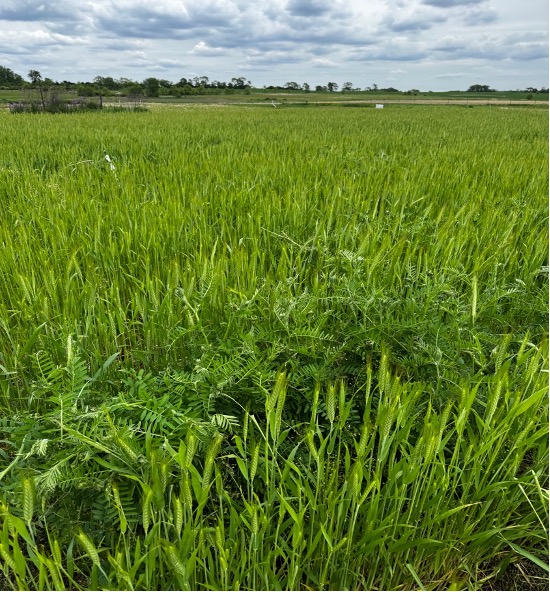
Figure 2: The experimental design used to produce the samples for this study was a Randomized Complete Block Design with a full factorial arrangement and three replicates. The figure shows an example of how the vetch samples were produced at our Prairie Du Sac field site. Vetch is pictured along the center of the row and is flanked by triticale to provide competition. This is done to mimic the system used by producers.